Delivering high-voltage engineering projects across data centres, utilities and renewable energy environments demands precision, coordination and uncompromising safety standards.
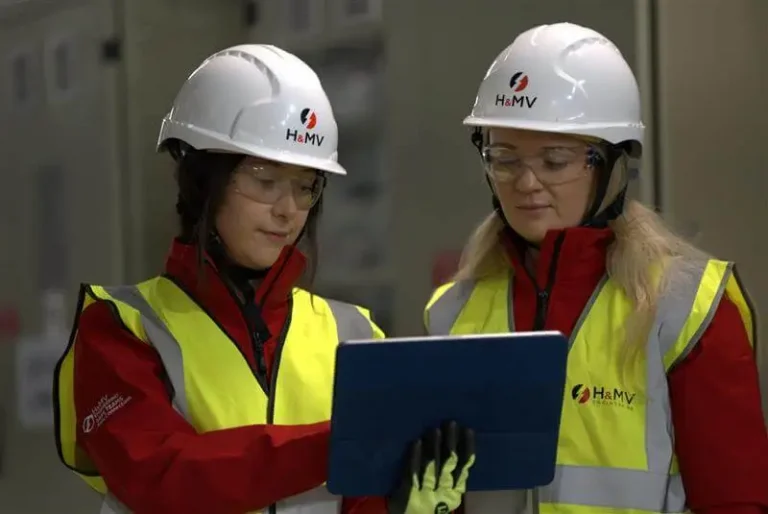
H&MV Engineering is a global specialist in high-voltage engineering and construction, supporting complex infrastructure projects across Europe and beyond. Operating in high-risk, compliance-heavy sectors, their teams work across multiple sites, jurisdictions and contractor networks, where consistent Health, Safety and Environmental (HSE) management is critical.
As their project portfolio expanded, so did the challenge: how do you scale safety without losing control, visibility or consistency?
Their answer was a structured digital HSE transformation powered by Kianda EHSwise.
Here are four key lessons from their journey.
1. Standardisation Is the Foundation of Scalable Safety
As organisations grow, fragmented reporting quickly becomes a risk.
H&MV needed a single, globally accessible system to capture incidents, observations, corrective actions and safety data across all projects. Manual processes such as spreadsheets and email-based reporting created delays, duplication and inconsistency.
By implementing a centralised safety reporting software platform, they established one consistent approach to HSE data collection. This improved data integrity, strengthened governance and ensured leadership had clear oversight across projects.
For engineering and construction firms, scalable HSE systems begin with structured standardisation.
2. Safety Reporting Must Work in Real Site Conditions
In high-pressure project environments, simplicity drives adoption.
H&MV recognised that any construction safety management software had to be practical for engineers and contractors working in the field. If reporting takes too long or feels disconnected from daily operations, it will not be used effectively.
By embedding HSE workflows directly into site activities, reporting became faster and more intuitive. The impact was significant: a 40% increase in Near Miss reporting, providing stronger leading indicators and enabling proactive risk management.
Digital HSE transformation succeeds when site teams see value, not extra admin.
3. Flexibility Enables Continuous Improvement
Compliance requirements evolve. Projects vary. Operational realities change.
Rather than adopting a rigid system, H&MV configured processes around how work is actually delivered across data centres and energy infrastructure projects. Workflows could be refined over time, supporting continuous improvement rather than a static rollout.
This flexibility is particularly important in sectors such as data centres and renewables, where project complexity and stakeholder requirements are constantly shifting.
Effective HSE digitalisation in engineering is not about software features. It is about adaptable process design.
4. Digital HSE Becomes a Platform for Broader Transformation
What began as an HSE initiative expanded into a wider operational digital strategy.
With structured, reliable safety data in place, H&MV extended digitalisation into Project Management, Commissioning, Quality Management and Site Labour Scheduling. Safety became the entry point for improving operational efficiency across the business.
For organisations operating in high-risk industries, digital HSE transformation often becomes the foundation for smarter, more connected project delivery.
From Digital HSE to Operational Excellence
What began as an HSE initiative expanded into a wider operational digital strategy.
With structured, reliable safety data in place, H&MV extended digitalisation into Project Management, Commissioning, Quality Management and Site Labour Scheduling. Safety became the entry point for improving operational efficiency across the business.
For organisations operating in high-risk industries, digital HSE transformation often becomes the foundation for smarter, more connected project delivery.
H&MV Engineering’s journey shows how EHS software for data centres and infrastructure projects can strengthen reporting, improve oversight and build a culture of accountability at scale.
But beyond systems and dashboards, their transformation highlights something more important: safety performance improves when processes are structured, accessible and aligned with how work actually happens on site.
In high-risk industries, reactive safety management is no longer enough. Leaders need real-time visibility, reliable data and workflows that drive action, not paperwork. Digital HSE transformation enables organisations to move from fragmented reporting to proactive performance management.
For engineering, construction and data centre operators looking to scale safely while maintaining compliance and operational efficiency, H&MV’s approach provides a practical blueprint.
👉 Read the full case study to explore how H&MV Engineering built a scalable, flexible global HSE system with Kianda EHSwise and what this could mean for your organisation.